Kaifeng

China · Henan

Kaifeng

Ancient capital with Song Dynasty heritage and the Qingming Festival scroll

Best for

Song Dynasty HistoryChrysanthemum FestivalAncient ArchitectureLocal Snacks

Recommended stay

2 days

Best season

Autumn (Oct–Nov) for Chrysanthemum Festival

Location

China, Henan

Snapshot

City Snapshot

A city at a glance

6 dimensions · 1–5 scale

PandaLoco's read of six travel-relevant dimensions on a 1–5 scale, built from public datasets and our travel criteria.

It describes the city's profile. It is not a ranking of better or worse cities.

Basis: Public datasets and PandaLoco travel criteria

Overview

Kaifeng is one of China's seven great ancient capitals and a historic city, known for its Song Dynasty legacy and as the inspiration for the Qingming Festival scroll.

Ideal Pace

2 days

Seasonal Window

Autumn (Oct–Nov) for Chrysanthemum Festival

Overview

Kaifeng is one of China's seven ancient capitals, once the economic and cultural center during the Northern Song Dynasty, depicted in the Qingming scroll.

Brief Guide

Kaifeng is located in eastern Henan. It is one of China's seven great ancient capitals and a famous historic city. During the Northern Song Dynasty, it was the economic, cultural, and legal center of China. The famous scroll painting "Along the River During the Qingming Festival" showcases the glory of Kaifeng during its era as the eastern capital. The current city still has an ineffable air of antiquity. When searching for the ancient capital among the ruins and broken tiles, it is easy to imagine the incredible prosperity the city must have had at the time the painting was created. Kaifeng is also known for its calligraphers and painters, earning a reputation as a city of refined culture and entertainment. Strolling among the various local academies and theaters is a unique experience in itself.
Getting There & Around

Kaifeng has no airport; accessible via Kaifeng Railway Station (since 1907) and long-distance buses. Local buses No. 1, 15, 20, 28 cover attractions.

How to Get There

Kaifeng's transportation network is primarily centered around its railway stations and long-distance bus services, as the city does not have an airport.

  • Kaifeng Railway Station: Situated on Longhai railway, operational since 1907, renovated in 2003.
  • Destinations: Connects to Xi'an, Luoyang, Zhengzhou, Beijing, Shanghai, Guangzhou, Shenzhen.
  • Local buses: Buses No.1, 18, 31 to Train Station - Passenger Terminal Bus Stop.
  • Kaifeng North Railway Station: Opened in 2016, part of Xuzhou–Lanzhou high-speed railway, design inspired by Northern Song Dynasty.
  • Destinations: High-speed trains to Xi'an, Luoyang, Zhengzhou, Beijing, Shanghai, Guangzhou.
  • Local buses: Buses 8, 21, 35, 47, 52, 53.

For air travel, the nearest major airport is Zhengzhou Xinzheng International Airport, located 98 km from Kaifeng. Travelers can take a shuttle bus from the airport to Zhengzhou and then transfer to a bus or taxi to reach Kaifeng.

Local Transportation

  • Public Buses: Well-developed, connects most attractions. Notable routes: 1, 15, 28 cover many attractions; 20 is a tourism line directly reaching all in-city attractions. Pay-to-driver; fare 1 RMB per person.
  • Intercity Buses to Zhengzhou: Available, departing every 10-20 minutes.
  • Taxis: Convenient and reasonably priced. Starting price 5 RMB for first 3 km, then 1 RMB per additional km. Scenic spot rides under 20 RMB; in-city typically under 10 RMB.
  • Rickshaws: Traditional choice, good for short downtown distances. About 1 RMB per km; full-day hire around 60 RMB.

Practical Information

Mandarin official; Jewish community once used Hebrew. Alipay, WeChat essential. China Mobile prepaid SIMs. Warm temperate continental climate. CNY currency.

Local Language

Kaifeng, a city with a history spanning over 4,100 years, is predominantly Chinese-speaking, with Mandarin being the official language.

The city's historical interactions with various cultures have introduced multilingual elements, such as the Jewish community that once used Hebrew.

While Mandarin prevails, visitors can utilize translation apps or local interpretation services for assistance.

Effective communication for non-Mandarin speakers may involve gestures, maps, and facial expressions.

The city's rich cultural tapestry, including the Hui ethnic group and historical Jewish presence, reflects its linguistic diversity.

Local Apps

  • Alipay: Ubiquitous in China, Alipay is used for various transactions and also facilitates easy public transportation and taxi services
  • WeChat: Essential for communication and transactions, WeChat serves as a social platform and digital wallet across China
  • DiDi Chuxing: Comparable to Uber, DiDi provides convenient ride-hailing services and can be used directly or through integration with Alipay
  • MetroMan: This app aids in navigating the subway systems across major Chinese cities, making city exploration straightforward
  • WAYGO: Useful for travelers, WAYGO translates Chinese, Japanese, and Korean text into English without needing an internet connection

Internet and Communication

Mobile data packages for tourists in China are available through local carriers.

  • China Mobile: Prepaid data SIMs with unlimited texts and calls within China, high-speed connections (sometimes 5G).
  • Unicom: SIMs with data packs and unlimited music apps; no long-term contracts required for either carrier.

Prices for eSIMs with unlimited data start at just $6 for China.

Public WiFi in China is widely available in airports, restaurants, coffee shops, and malls. However, connecting often requires a Chinese phone number for text verification, which can be challenging for travelers without a local SIM.

Global WiFi devices like Skyroam offer a convenient alternative, connecting multiple devices and requiring no additional setup upon arrival.

Weather

Kaifeng experiences a warm temperate continental monsoon climate with four distinct seasons, moderate rainfall, and abundant sunshine. The annual average temperature is around 14°C, with the highest temperatures in July and the coldest in January.

  • Light, breathable outfits for hot summers.
  • Warm layers, including down coats, for chilly winters.
  • Sunscreen for sunny days, especially in summer, to protect against strong UV radiation.
  • Gloves and scarves in winter to handle the cold.

Customs and Taboos

  • During traditional festivals in Kaifeng, such as the Ancient Capital Lantern Festival, avoid participating in public gambling activities like cockfighting, which is part of the artistic lantern show but not suitable for visitor participation.
  • Respect the cultural heritage of the Jewish community in Kaifeng by understanding their historical background and contributions without appropriating their religious expressions or entering private worship areas uninvited.
  • When visiting Millennium City Park or Daxiangguo Temple, cultural performances such as traditional skits and opera are respected arts; clapping loudly after performances is appreciated, whereas interrupting the performance is considered rude.
  • Photography at culturally sensitive locations like Millennium City Park should be conducted respectfully and discreetly to avoid disrupting ongoing cultural activities or the privacy of participants in traditional events.

Currency and Payment

In Kaifeng, keep payment planning practical and conservative. Use the options explicitly supported by your apps or merchant, and confirm details before relying on a single method.

  • Mobile Payments: Alipay and WeChat Pay are mentioned in the source; set up supported apps before relying on QR-code payments.
  • Cards: Credit card, debit card, or international card support may work through selected apps or merchants, but acceptance should be confirmed before payment.
  • Confirm Acceptance: Before paying, confirm the merchant, hotel, or transport service accepts your chosen method.

Top Experiences

Visit Dragon Pavilion Park, Iron Pagoda, Prime Minister's Temple, and Kaifeng Museum to explore ancient architecture and Song Dynasty legacy.

Must-try local experiences

  1. Explore Kaifeng's Rich History by Visiting the Dragon Pavilion Park, Iron Pagoda, Prime Minister's Temple, and Kaifeng Museum. These sites offer a glimpse into ancient architecture and the Song Dynasty's legacy.
  2. Experience the Qingming River Park, a recreated scene of 'Along the River During the Qingming Festival.' Enjoy traditional performances, interact with costumed characters, and savor authentic snacks.
  3. Uncover the Legacy of Jewish Merchants at the Kaifeng Jewish Descendants Experience Center. Explore the remnants of the synagogue and learn about their cultural practices.
  4. Explore the Ancient City Wall for panoramic views and a glimpse into the city's rich past.
  5. Stroll through Millennium City Park, which recreates the famous painting 'Along the River During the Qingming Festival.' Enjoy traditional performances and cultural activities.
  6. Explore Kaifeng Fu, the ancient government office, providing insight into the Song Dynasty's administrative structure with well-preserved buildings and exhibits.
  7. Delve into the World of Bian Embroidery at the Kaifeng Bian Embroidery Research Institute, admiring intricate needlework and vibrant colors.
  8. Experience Traditional Shadow Puppetry, a traditional Chinese art form practiced for centuries.
  9. Watch a Henan Opera Performance to experience unique music, costumes, and storytelling.
  10. Visit the Kaifeng Museum to see exhibits of ancient artifacts, calligraphy, and traditional crafts.
  11. Savor the Flavors of Kaifeng Cuisine, including steamed buns, carp noodles, and five-spice donkey meat.
  12. Find Treasures at the Drum Tower Night Market, offering local handicrafts, souvenirs, clothing, and street food.
  13. Take a Boat Ride on the Bian River for scenic views and a unique perspective of historic landmarks.
  14. Respect Local Religious Sites such as Daxiangguo Temple and various mosques by dressing modestly and following local customs.

Food Highlights

Sweet potato puree, carp blanketed in baked noodles, bucket chicken, and stir-fried liangfen are local specialties.

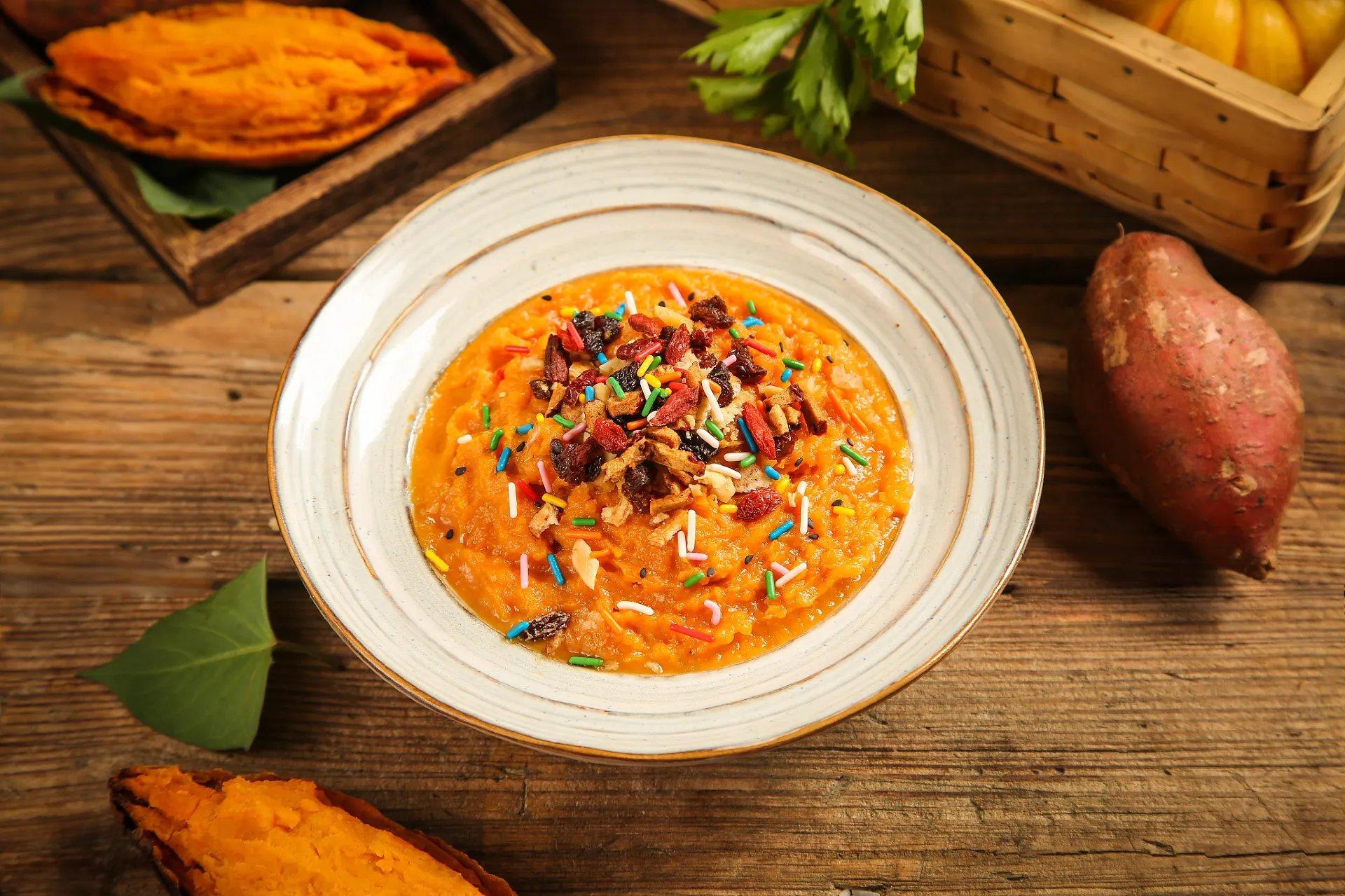
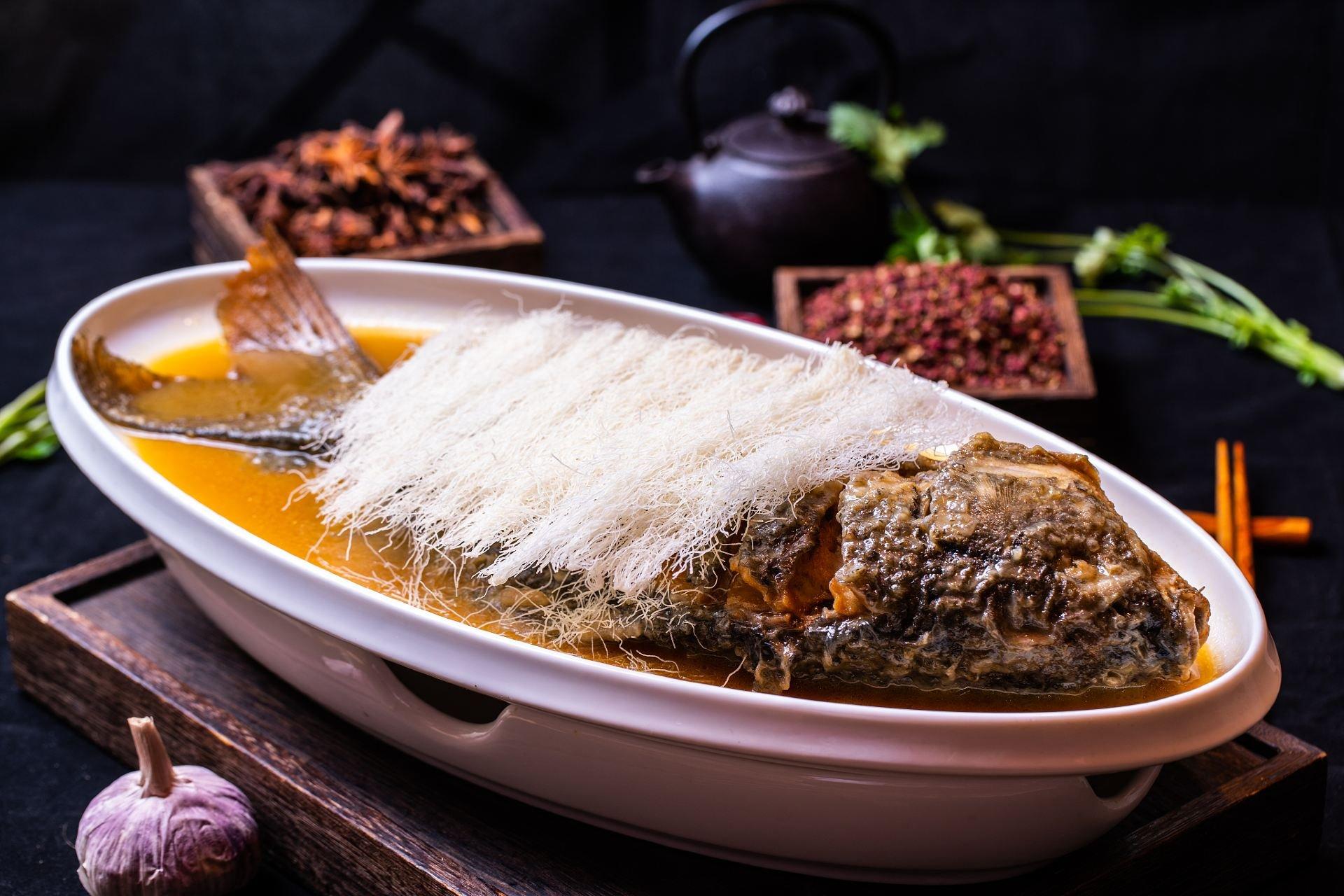
Kaifeng is celebrated for its culinary scene, featuring both traditional dishes and street snacks. Signature treats include the sweet and creamy mashed sweet potatoes, a distinctive date-red baked carp with noodles, the deliciously savory and crispy barrel chicken, and the silky stir-fried cold noodles. Each dish is a vital part of the local culinary heritage.

Sweet potato puree

Sweet potato puree

Sweet potato puree is a renowned traditional snack from the Han Chinese community. The process involves selecting high-quality sweet potatoes, mashing them into a puree, and then stir-frying them in a heated pan with peanut oil. To enhance the flavor, white sugar, hawthorn, and osmanthus are mixed in. This results in a dish with a rich, brownish-red color and a pleasantly sweet, soft, and sticky texture.

Carp blanked in baked noodles

Carp blanked in baked noodles

Baked Noodles over Carp is a classic dish from Kaifeng, composed of two renowned dishes: sweet and sour fish and baked noodles. The dish is characterized by its deep red hue, the fish being fragrant and tender, and the noodles, which are hair-thin, soft and crisp. Available across various restaurants in Kaifeng, this dish is a must-try for its delightful flavors.

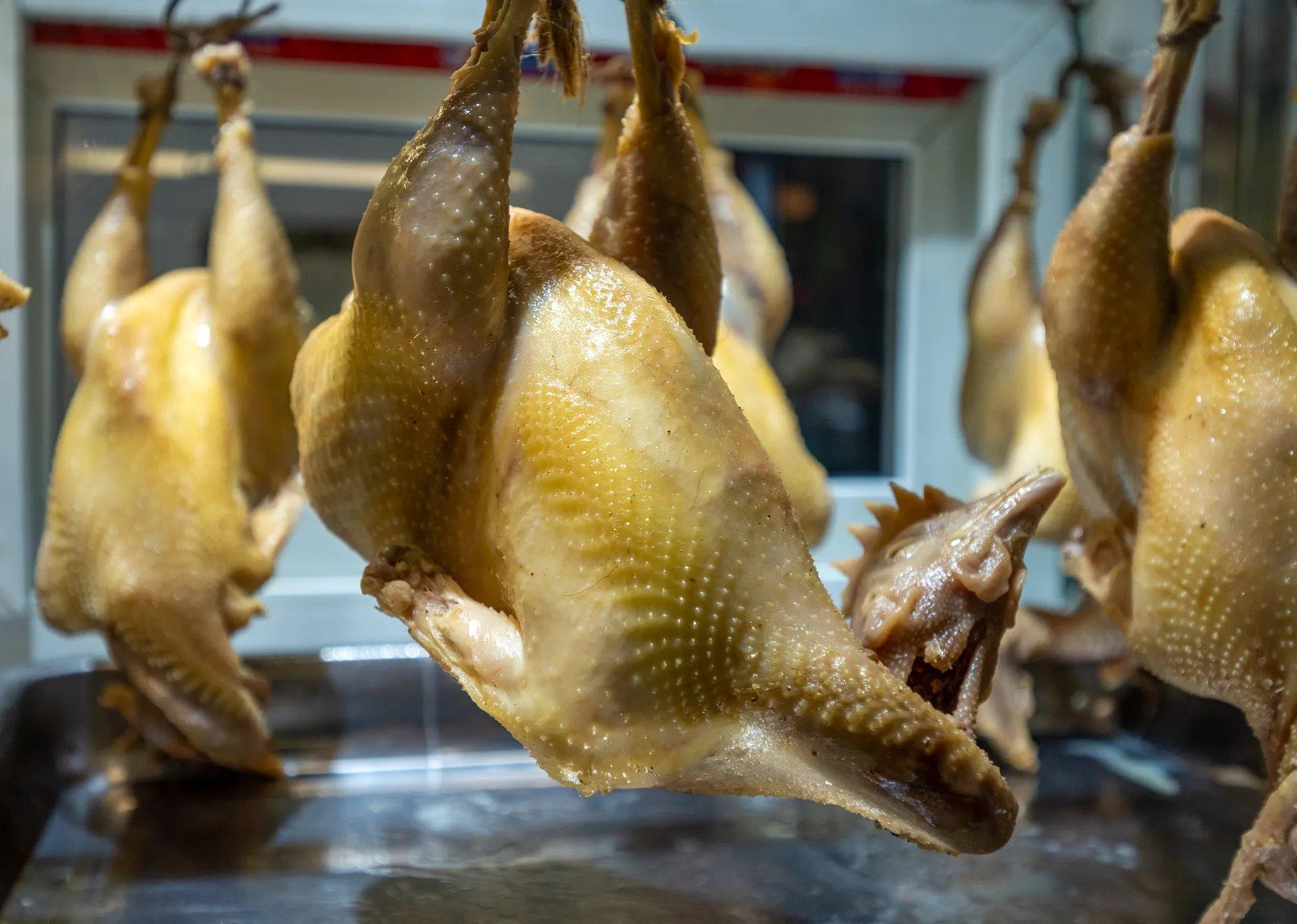
Bucket chicken

Bucket chicken

'Bucket chicken' is a renowned dish from Kaifeng, crafted by slow-cooking select aged hens in a rich, carefully prepared broth. Once cooked, the hens are deboned and sliced into pieces, delivering savory, tender, and crispy meat with a golden hue.

Stir fried liangfen

Stir fried liangfen

Stir fried liangfen is a popular snack in Kaifeng, crafted from either sweet potato or mung bean starch. The dish is stir-fried with soybean paste and scallions, using sesame oil which brings out its translucency and gives it a fresh, fragrant, and tender texture, making it extremely delicious.

Best Time to Visit

Best in autumn, especially late October to November, during the Chrysanthemum Festival with pleasant weather.

  • Autumn (late October to late November): Pleasant weather and the renowned Chrysanthemum Festival, a cultural highlight attracting visitors.
  • Spring (April): Comfortable temperatures and the Song Dynasty Culture and Art Festival, offering glimpses into local folklore and historical parks.

Attraction Highlights

Qingming Riverside Landscape Garden, Kaifeng City Hall Theme Park (Millennium City Park), Kaifeng Museum, and Daxiangguo Temple.

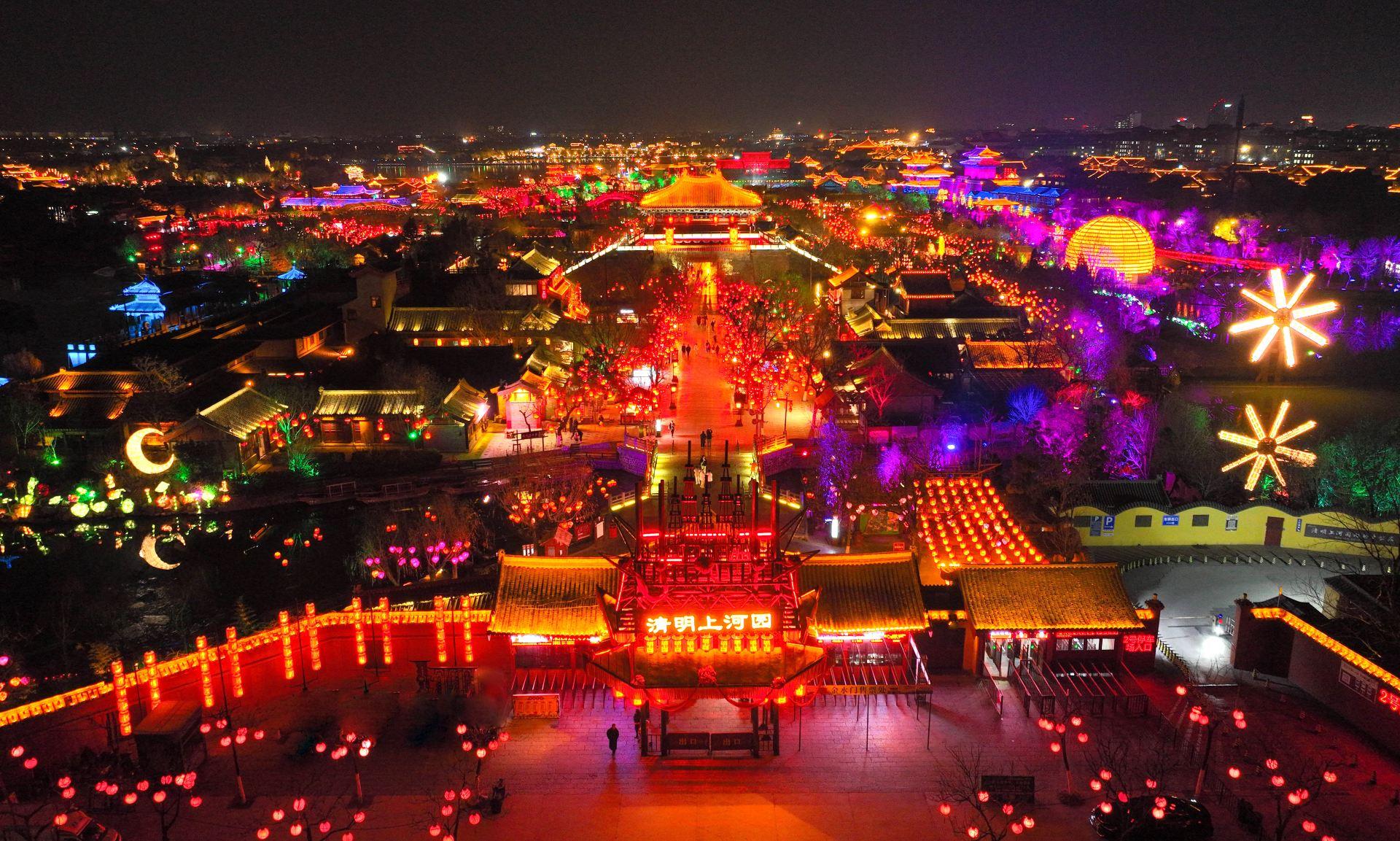
Millennium City Park

Millennium City Park

清明上河园

Millennium City Park recreates the Northern Song capital Bianjing as depicted in the famous painting 'Along the River During the Qingming Festival.' Costumed staff, period buildings like teahouses and pawnshops, and daily cultural performances such as 'Baogong patrolling the Jinghe River' immerse visitors in Song Dynasty life and folk traditions.

0.5-1 day
120 CNY
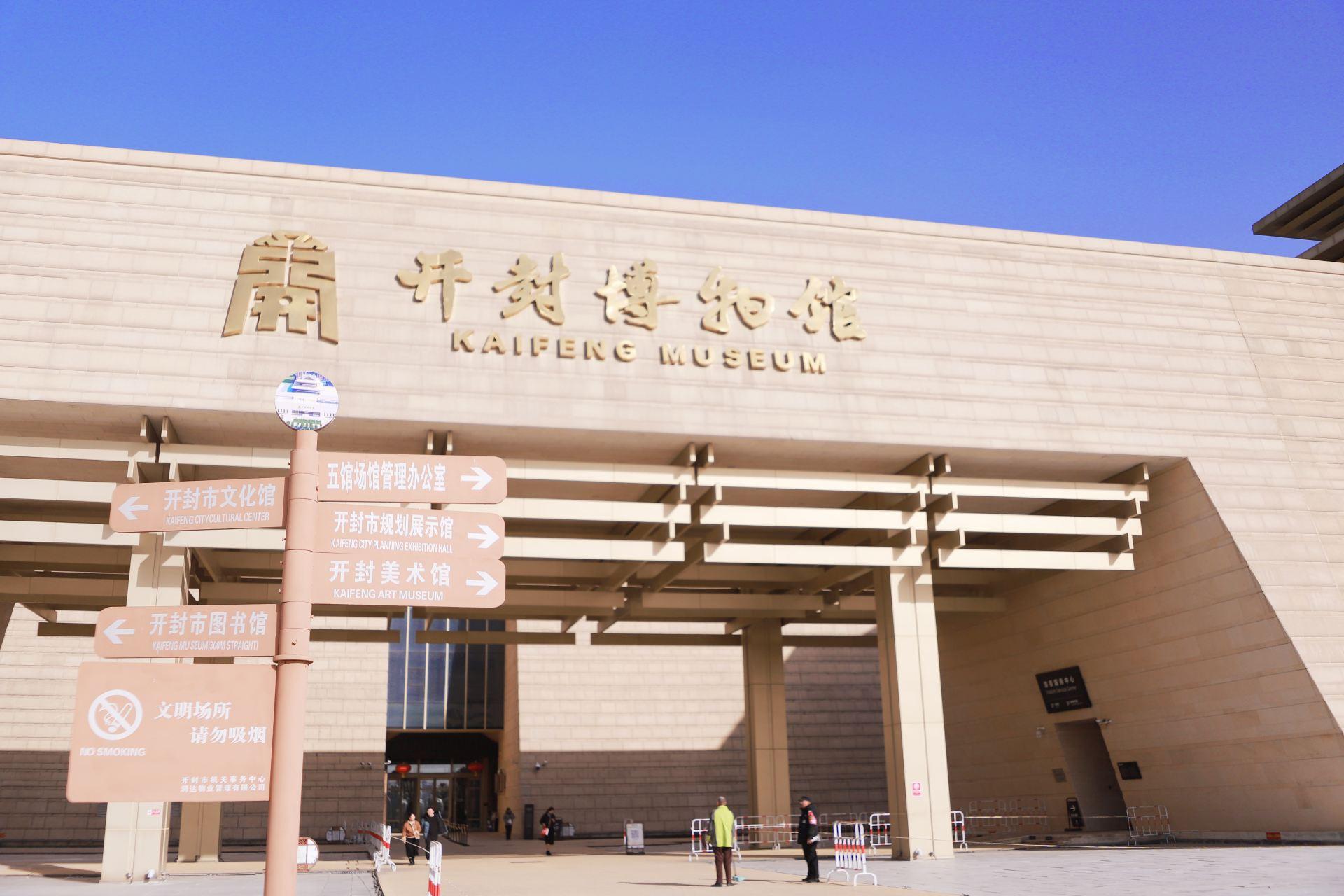
Kaifeng Museum

Kaifeng Museum

开封博物馆

The Kaifeng Museum, located on Hangzhong Road, is a comprehensive local museum housed in a striking antique building with yellow-glazed tile roofs. It integrates exhibitions, cultural relic collection, preservation, research, and education, showcasing a rich and exquisite collection renowned across the province and beyond.

2-3 hours
Free
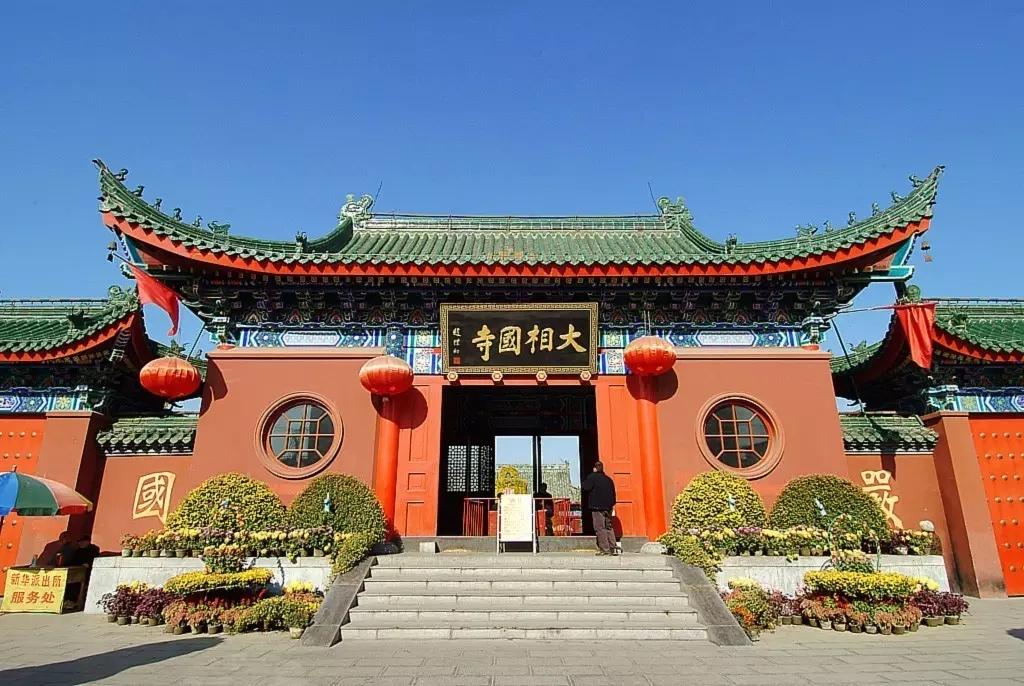
Daxiangguo Temple

Daxiangguo Temple

大相国寺

Daxiangguo Temple, originally Jianguo Temple, was founded during the Northern Qi Dynasty and served as a royal temple in the Northern Song. It features a Qing-dynasty Thousand-armed Avalokiteshvara statue and a 1768 bronze bell. The current structures are recent reconstructions on a smaller scale.

1-2 hours
37.5 CNY

FAQ

What's the most popular attractions in Kaifeng?
The most popular attractions in Kaifeng include Qingming Riverside Landscape Garden, Kaifeng City Hall Theme Park, and Longting Park.
Things to do near Kaifeng for family & child?
For family and children, you could try Tokyo Polar Aquarium, Yinji Water Park, Bianjing Park, Forest Park, and Nianhua Museum in Kaifeng.
Any recommended attractions about nature scenery in Kaifeng?
Recommended attractions for nature scenery in Kaifeng include Song Dynasty Yuhe River, Baogong Lake, and Yellow River Embankment Kaifeng Section.
What is a good souvenir from Kaifeng?
Good souvenirs from Kaifeng include peanut cake and chrysanthemum cake, both of which taste great and are local specialties.
What is the best season to visit Kaifeng?
The best season to visit Kaifeng is autumn, from September to October, when the chrysanthemums bloom across the city. The weather is mild, precipitation is moderate, and the trees are beautifully colored.
In which area should I book my hotel in Kaifeng?
Stay near Imperial Street, where you can easily visit Dragon Pavilion, Qingming Shangheyuan, and Wuxia City, all within walking distance.
Last updated 10/8/2026 · published