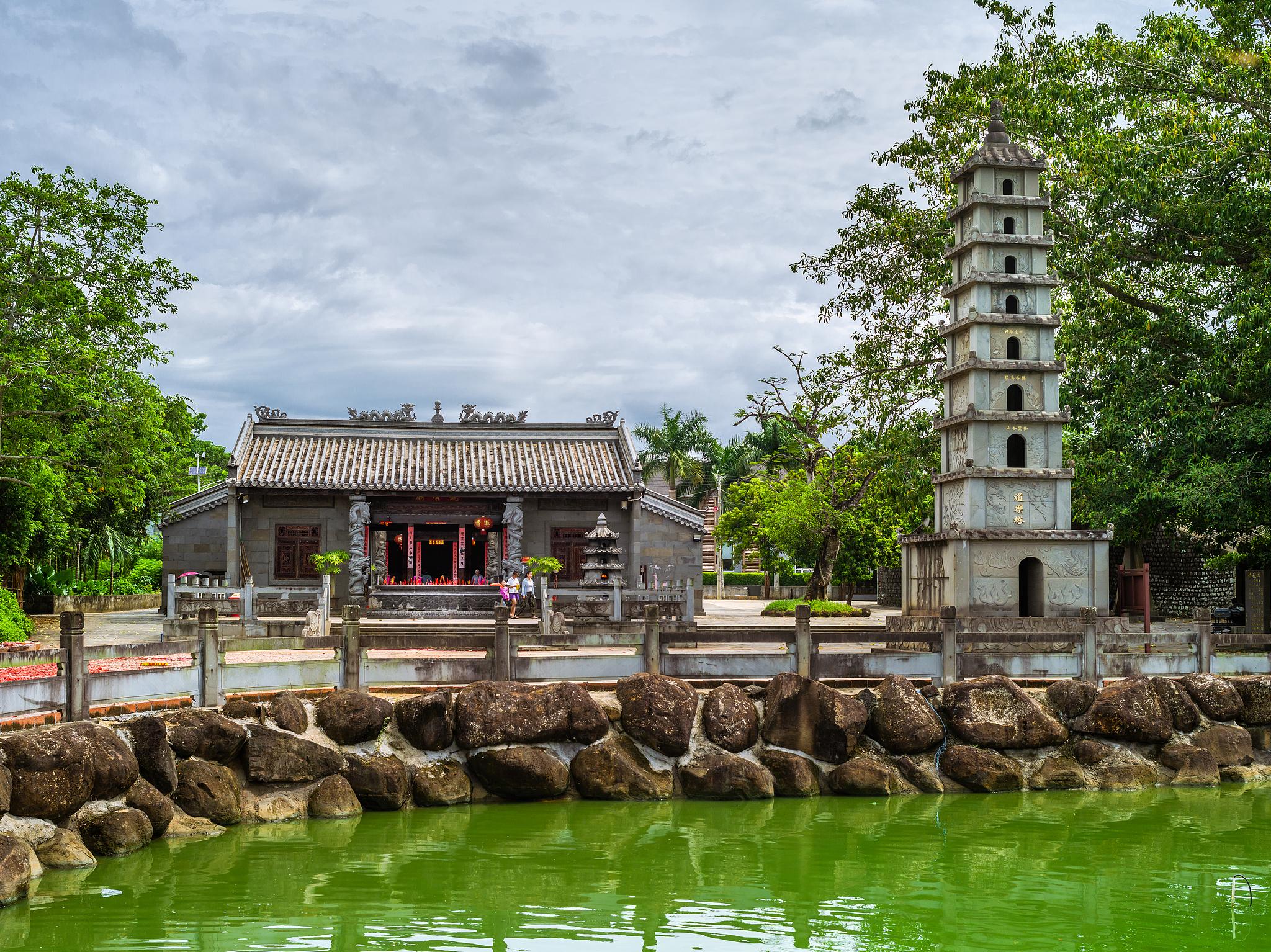
Chengmai is a county in northern Hainan Province, adjacent to the provincial capital Haikou. It offers a mix of natural and cultural attractions, including the Chengmai R & F Mangrove Wetland Park, Luoyi Ancient Village, Fushan Coffee Culture Town, Yongqing Temple, and the Meilang Sisters Towers. The area is known for its wetlands, historical villages, and coffee culture.
Overview
Chengmai County in northern Hainan has mangrove wetlands, an ancient village, a coffee culture town, a temple, and twin pagodas.
Ideal Pace
2-3 days
Seasonal Window
November to April (dry season)
Overview
Chengmai County in northern Hainan features mangrove wetlands, Luoyi Ancient Village, Fushan Coffee Culture Town, Yongqing Temple, and Meilang Sisters Towers.
Getting There & Around
Located near Haikou, accessible by road. Limited local transportation; taxis or rental cars recommended to reach attractions.
Transportation
Chengmai is located in northern Hainan, near Haikou. The city center coordinates are approximately 110.00°E, 19.74°N. Visitors can reach Chengmai by road from Haikou. Local transportation options are limited; taxis or rental cars are recommended for exploring attractions such as the mangrove wetland park, ancient villages, and coffee town.
Practical Information
Tropical climate. Best visited November–April. Some attractions require half-day to full-day, others 1–3 hours. Bring sun protection and insect repellent.
Practical Info
Chengmai has a tropical climate. The best time to visit is during the dry season from November to April. Attractions like the mangrove wetland park may require half a day to a full day, while ancient villages and temples can be explored in 1-3 hours. It is advisable to bring sun protection and insect repellent.
Top Experiences
Explore Chengmai R & F Mangrove Wetland Park with boardwalk and flamingos. Visit Luoyi Ancient Village for traditional Hainan architecture.
Chengmai offers a blend of nature and culture.
- Explore the Chengmai R & F Mangrove Wetland Park, a vast mangrove forest with a long boardwalk and flamingos.
- Visit Luoyi Ancient Village to see traditional Hainan architecture and stone roads.
- Discover Fushan Coffee Culture Town for local coffee and customs.
- Yongqing Temple provides a peaceful retreat.
- Meilang Sisters Towers showcase historic twin pagodas.
Best Time to Visit
Tropical climate. Best time: dry season November to April, with mild weather and low rainfall. Avoid rainy season May–October.
Chengmai has a tropical climate. The best time to visit is during the dry season from November to April, when weather is mild and rainfall is low. Avoid the rainy season from May to October if possible.
Attraction Highlights
Key attractions include mangrove wetland park with flamingos, ancient village with stone roads, coffee culture town, Buddhist temple, and Yuan Dynasty twin pagodas.
Chengmai R & F Mangrove Wetland Park
Chengmai R & F Mangrove Wetland Park, located in northern Hainan near Haikou, features a long boardwalk through mangrove wetlands. Visitors can enjoy views of the forest on water and observe flocks of flamingos. The park is open daily from 8:30 AM to 5:30 PM and is ideal for a half-day to full-day visit.
Luoyi Ancient Village
Luoyi Ancient Village in Chengmai County preserves traditional Hainan residential buildings and stone roads, offering a glimpse into local history and architecture. Surrounded by lush landscapes, it is perfect for hiking and sightseeing. The village is open year-round, 24/7, and a visit typically takes 2-3 hours.
Fushan Coffee Culture Town
Fushan Coffee Culture Town in Chengmai is a tourist distribution centre surrounded by ten unique coffee-themed villages. Each village showcases local coffee planting, production, and folk customs, all linked by a shared coffee culture. Visitors can explore the area in 2–3 hours, and the site is open 24/7 year-round.
Yongqing Temple
Yongqing Temple, located on Yingbin Peninsula in Chengmai, is a large Buddhist temple covering 80 acres. Originally built in the Tang Dynasty, it was one of the 'Eight Sceneries of Chengmai' and was visited by notable historical figures such as Su Dongpo. The temple was rebuilt in 2001 after being destroyed multiple times. It is open daily from 8:30 AM to 5:00 PM, and a visit typically takes 1–2 hours.
Meilang Sisters Towers
The Meilang Sisters Towers, also known as the Twin Pagodas, are Yuan Dynasty pagodas located in Meilang Village, Chengmai. Standing 17 metres tall, the hexagonal towers feature imitated wood-structure attic designs with bucket arches and hidden pillars. Built in memory of two daughters, the towers are open 24/7 and can be visited in 1–2 hours.
Leigong Island
Leigong Island in Chengmai features large areas of rugged reefs where waves create captivating splashes. It is a relaxing spot for beachcombing and digging for sea snails with family and friends. The island is open daily from 8:00 AM to 6:00 PM, and a visit can take up to half a day.
Jinshan Temple
Jinshan Temple, located on scenic Jinshan Mountain in Chengmai, is a historic temple dating back to the Ming Dynasty. Its architecture combines traditional Chinese style with local features, featuring red walls, yellow tiles, and intricate carvings. The temple serves as both a religious site and a cultural hub, hosting various events throughout the year. Open 24/7, it offers a serene environment for visitors.
Baoliang Ancient Village
Baoliang Ancient Village, over 300 years old, offers a glimpse into traditional rural life. Visitors can explore wood carvings and handicrafts, and enjoy unique experiences like roasting coffee beans in iron pots and woodworking. The village provides an immersive cultural experience in a historic setting.